Elena Simmons · 26 September 2026
Marena's Virtual Workshops Connect Italian Craft Traditions to Student Initiatives Across Europe
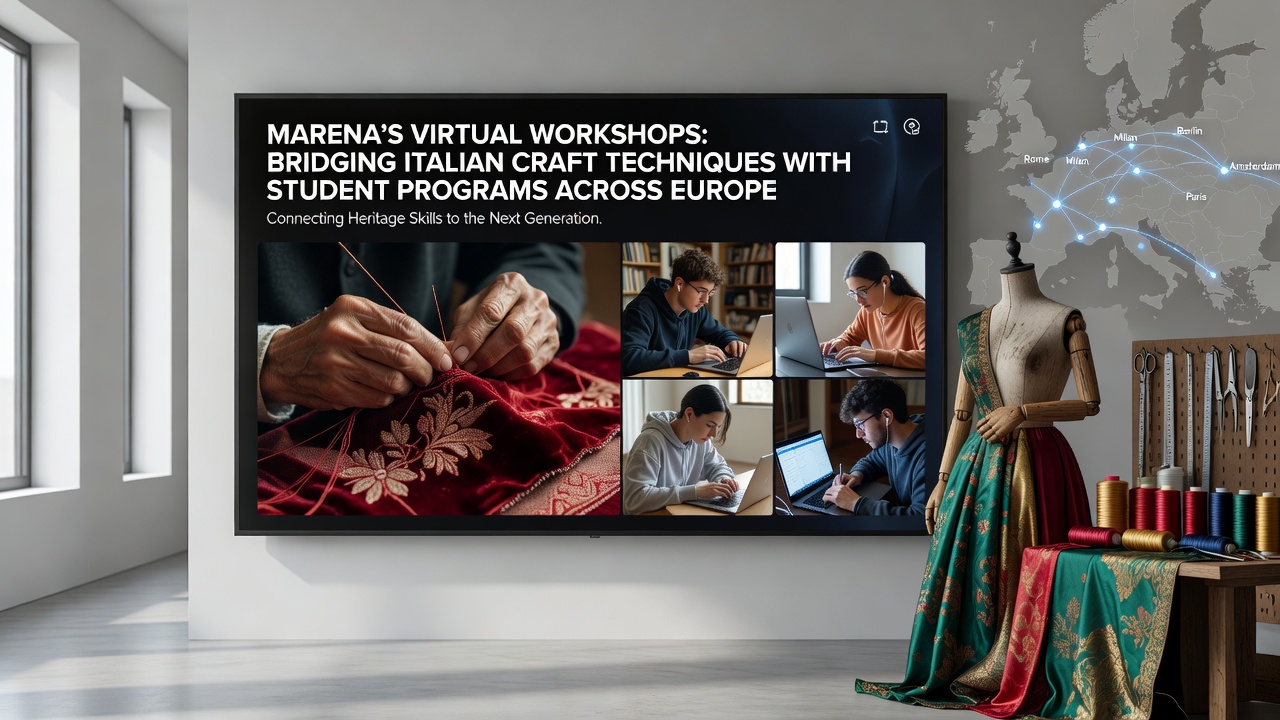
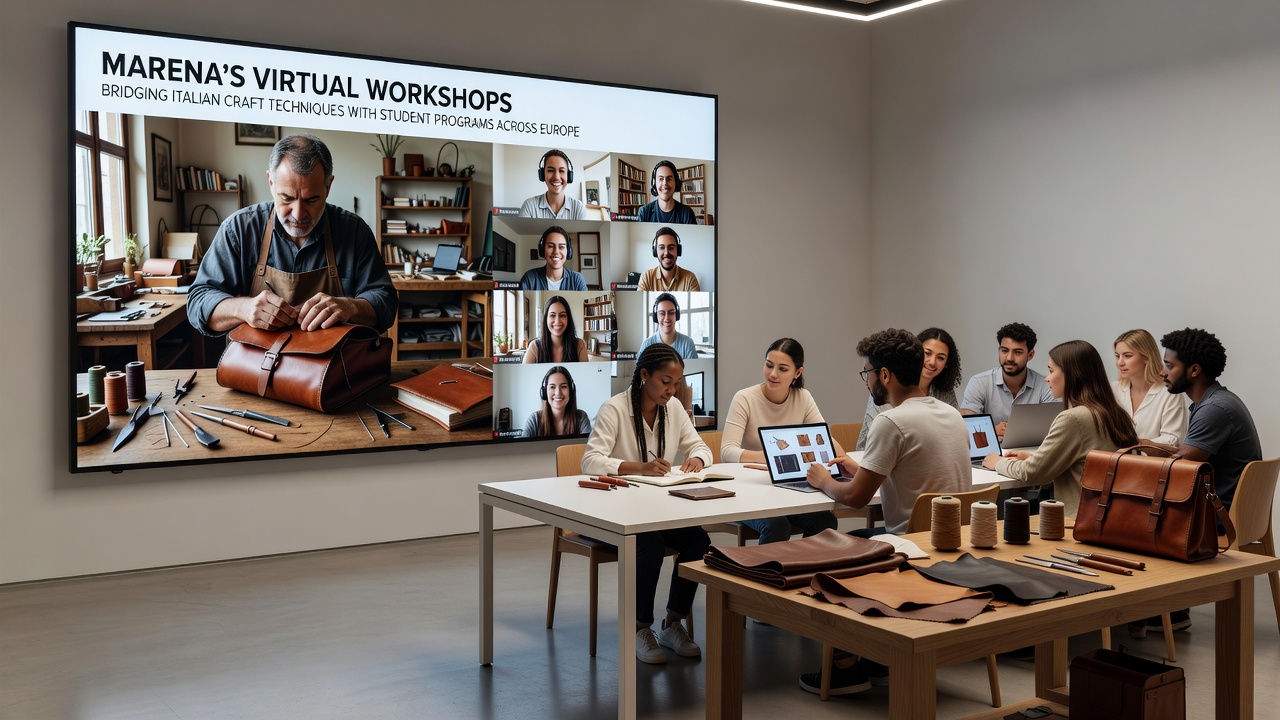
Marena's virtual workshops have expanded access to Italian craft techniques for student programs in multiple European countries since their launch in 2023, and data from participating institutions shows increased enrollment in related courses. Observers note that these sessions focus on methods such as handloom weaving, ceramic glazing, and embroidery patterns rooted in regional Italian practices, while participants join from locations including Germany, France, Spain, and the Netherlands through synchronized online platforms.
Workshop Structure and Delivery Methods
Each session runs for two hours and combines live demonstrations with interactive feedback segments, and instructors based in Italy guide students through material selection, tool usage, and historical context before assigning follow-up projects that align with academic curricula. Research indicates that over 1,200 students have completed at least one workshop cycle by mid-2025, with completion rates reaching 87 percent according to internal program reports from partner universities. The format allows real-time adjustments for different skill levels, which accommodates both beginners in secondary schools and advanced learners in vocational training programs.
Participants receive digital toolkits that include pattern templates, supplier lists for authentic materials, and video archives of past sessions, and these resources remain accessible for six months after enrollment. What's interesting is how the workshops integrate with existing European Union education frameworks, as several partner schools have incorporated the modules into their formal assessment structures for art and design qualifications.
Regional Craft Techniques Featured in Sessions
Italian weaving traditions from regions like Tuscany and Umbria form one core focus, where students learn to replicate specific loom setups and thread counts that produce characteristic textile structures, and similar attention goes to Sicilian ceramic methods that emphasize hand-painted motifs and kiln temperature controls. Data shows that workshops covering embroidery from the Marche area attract the highest repeat registrations, as participants often extend their studies into independent research projects. Instructors draw from documented archives held by Italian craft guilds, which ensures techniques match historical records rather than simplified adaptations.
September 2026 marks the scheduled rollout of an expanded schedule that adds modules on Venetian glass beadwork and Piedmontese wood inlay, and advance registrations have already opened through partner institutions. This expansion follows feedback collected from earlier cohorts, which highlighted demand for techniques that connect directly to local heritage tourism sectors in students' home countries.
Partnerships With European Student Programs
Collaborations with universities in multiple countries have produced joint certification pathways, and one example involves a German design academy that credits completed workshops toward its bachelor program requirements. According to figures released by the European Institute for Innovation and Technology, cross-border craft education initiatives like these have grown by 34 percent in participation since 2022, with Marena's model cited in case studies for its virtual delivery approach. Students in Spain have applied learned techniques to community restoration projects, while those in France have integrated elements into fashion design coursework.
Additional support comes through scheduled office hours where instructors address technical challenges such as adapting local materials to Italian methods, and group forums allow participants to share progress across time zones. The approach maintains consistency with guidelines from the European Commission's education policy documents, which emphasize digital inclusion for cultural preservation training.
Outcomes and Measured Impacts
Survey responses collected from 2024 cohorts reveal that 72 percent of participants reported applying at least one technique in subsequent academic or personal projects, and follow-up data tracks continued engagement through alumni networks. Institutions involved have documented improvements in student retention within creative programs, particularly when workshops align with semester timelines. One study from a participating Dutch university found measurable gains in technical precision scores among students who attended multiple sessions compared to control groups.
Resource sharing extends beyond the workshops themselves, as recorded sessions feed into open-access repositories managed by partner organizations, and this broadens reach to students who cannot attend live events due to scheduling conflicts. Turns out the model also supports instructors in Italy by providing supplementary income streams tied to documented participation metrics.
Future Directions and Scheduled Developments
Plans for 2026 include pilot sessions that incorporate augmented reality overlays for loom setup guidance, and testing phases are underway with select partner schools in Italy and Belgium. These additions aim to address specific feedback about visualizing three-dimensional techniques on flat screens. Coordination with regional craft associations ensures ongoing updates to content as new documentation emerges from field research.
Conclusion
Marena's virtual workshops continue to link Italian craft methods with student programs throughout Europe through structured online delivery and institutional partnerships, and ongoing expansions scheduled for September 2026 build on established participation trends and outcome measurements. The initiative maintains focus on documented techniques and measurable educational integration while adapting to digital formats that reach broader audiences across borders.