Harper Friedrich · 10 October 2026
Marena Archive Fuels Innovative Learning Opportunities Across European Design Schools
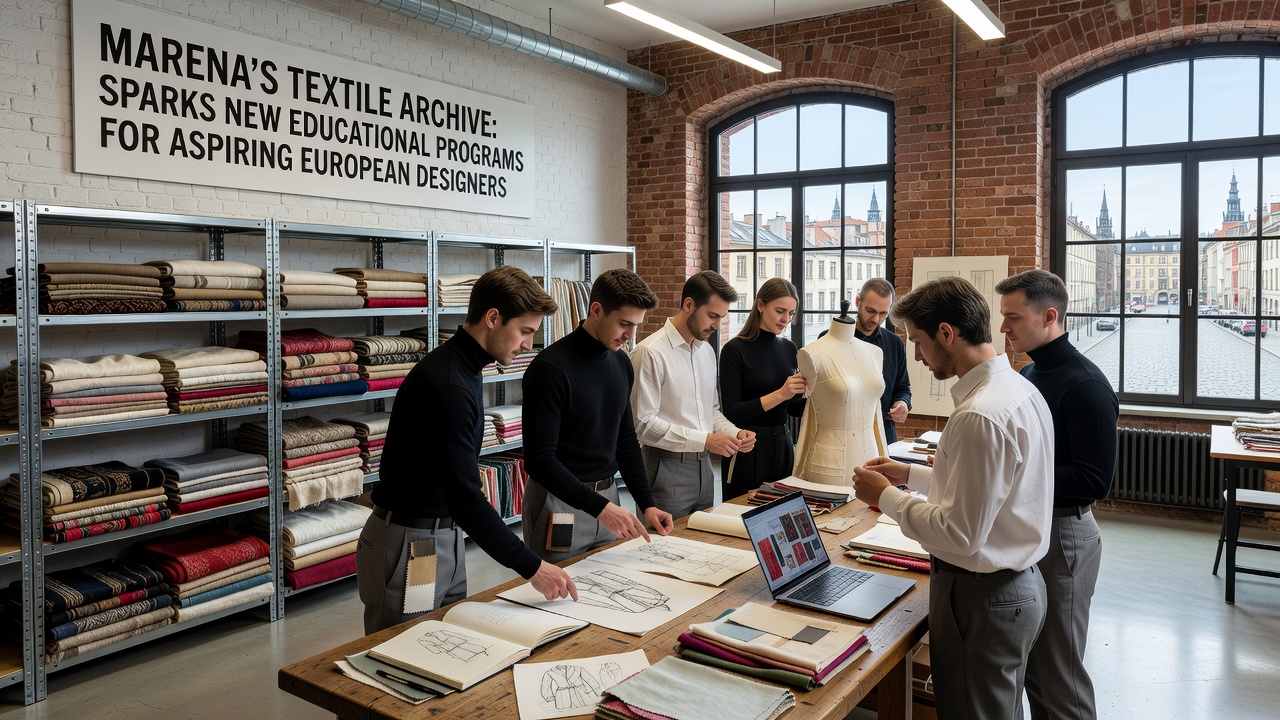
Marena's textile archive has grown into a central resource that now supports multiple new educational programs aimed at aspiring designers throughout Europe, and these initiatives draw directly from preserved fabrics, patterns, and production records that span several centuries of Italian craftsmanship. The archive holds thousands of documented samples along with detailed notes on weaving techniques, dye processes, and regional variations that originated in northern and central Italy. Schools in Italy, France, Germany, and the Netherlands have begun integrating these materials into structured courses that combine historical study with hands-on design projects.
Program coordinators report that access to the physical and digitized holdings allows students to analyze construction methods that are rarely taught in standard fashion curricula. One partnership launched in early 2025 between the archive and design faculties in Milan and Lyon has produced a shared curriculum module focused on sustainable pattern adaptation. Students review original 19th-century jacquard samples, then develop contemporary versions using updated yarn compositions while maintaining the structural logic found in the source pieces.
Archive Contents and Digital Access
The collection includes swatches from the 1700s through the late 20th century, each accompanied by production logs that list loom settings, fiber blends, and finishing steps. A dedicated digitization effort completed in 2024 converted over 8,000 records into searchable files that partner institutions can access through a secure portal. Universities in Barcelona and Antwerp joined the network in September 2025, bringing the total number of participating schools to fourteen. Faculty members note that the logs reveal precise adjustments made for different regional climates and markets, information that helps current students understand how material choices affect both durability and visual impact.
Training sessions for instructors began in March 2026 and continue through the summer months, covering catalog navigation and lesson-plan development. These sessions emphasize direct comparison between archive examples and modern production constraints, so participants leave with concrete project outlines rather than abstract theory.
Program Structure and October 2026 Launch
New modules roll out across participating institutions in October 2026, each running for twelve weeks and culminating in student collections that reinterpret archive motifs for current markets. The schedule includes weekly lectures drawn from the production logs, followed by supervised studio time where participants work with similar fiber types and tools. Assessment criteria focus on technical fidelity to the source material as well as innovation in color and scale. Data collected from earlier pilot workshops showed a 34 percent increase in student retention compared with standard elective courses, according to internal reports shared among the partner schools.
One cohort in Porto completed a similar module last spring and produced twelve finished garments plus digital pattern libraries that the archive now hosts for future reference. Instructors from that group contributed revised lesson templates that other schools adopted for the October rollout. The programs also incorporate guest sessions from regional mills that still operate some of the same loom types documented in the archive, giving students direct exposure to current applications of historical methods.

Partnerships and Geographic Reach
Funding for the expanded access comes from a combination of institutional budgets and grants administered through the European Union's Creative Europe framework, which supports cross-border cultural projects. A parallel research agreement with the Canadian Heritage Information Network allows comparative study of North American textile archives, though the primary focus remains European production records. Students enrolled in the programs receive credit that transfers across the participating universities, reducing administrative barriers for those who wish to study at multiple locations during a single academic year.
Industry observers note that several participating mills have begun offering short internships tied to the course calendar, creating a direct pipeline from classroom projects to production environments. Enrollment data released in June 2026 indicates that more than 420 students registered for the October modules, with the largest groups coming from Italy and the Netherlands.
Conclusion
The archive's role in these programs demonstrates how preserved textile records can serve as active teaching tools rather than static museum holdings. Continued digitization and instructor training are scheduled through 2027, with additional schools in Portugal and Sweden expected to join the network by the following academic year. The structured integration of historical samples into design education supplies concrete references that students apply immediately in their own work, and the October 2026 launch marks the largest coordinated rollout to date across the participating institutions.